
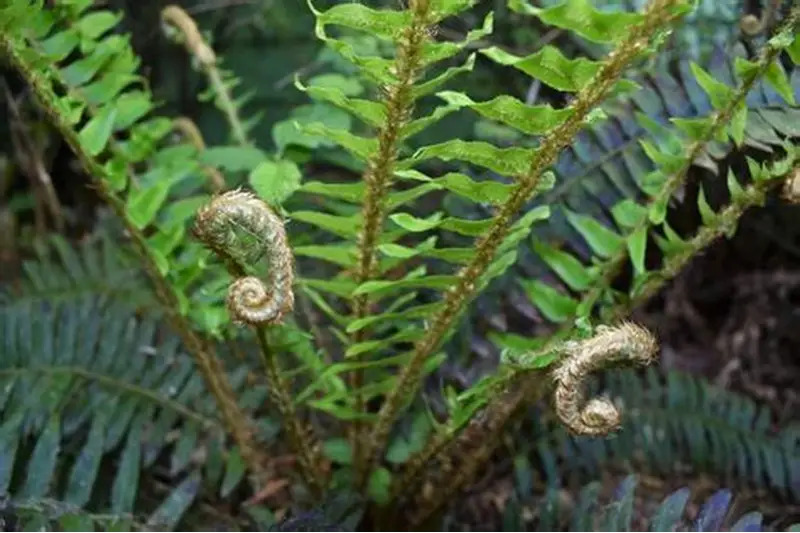

Like all living organisms, land plant are also believed to have originated from their aquatic ancestors. In this evolutionary transition from aquatic to terrestrial habitats, a group of plants commonly known as vascular plants (or Tracheaophytes) developed an efficient conducting system, consisting of xylem and phloem. The evolution of conducting (or vascular) system solved the requirement of water and food transport throughout the plant body – an essential requirement for an organism to grow on land. Also, the cell wall in the vascular plants synthesizes lignin – a complex polymer of phenolic compounds – which provides rigidity to the plant body to reach great heights.
Presently, a number of extinct and living groups of the vascular plants are recognized under different classification schemes. Traditionally, the three broad groups recognized under vascular plants are:
Pteridophytes, Gymnosperms and Angiosperms.
The Pteridophytes are the vascular plants which lack seeds. Unlike the gametophyte in Bryophytes, the sporophyte is the dominant generation in Pteridophytes.
1.Habit : The plants vary from small- sized annuals (Azolla, Salvinia) to large tree – like perennials ( Angiopteris, Osmunda). Of the known pteridophytes, the smallest representive is Azolla (an aquatic fern) and the largest one is Cyathea (tree fern).
2. Habitat : The pteridophytes occur in a variety of habitats. Mostly, they are terrestrial and grow well in abundant moisture and shaded localities e.g. ferns. Some species grow well in xeric conditions, e.g., Selaginella rupestris, Equisetum and Gleichena. A few are aquatic and component of pools and ponds (Marselia, Azolla) and lakes (Salvinia), while some are epiphytic, e.g., Lycopodium phlegmaria, Selaginella oregano, Lepisorus, Drynaria, Ophioglossum pendulum, etc. and lithophytic (Psilotum, Adiantum).
3.Plant body: The main plant body is a sporophyte. It shows differentiation into true root, stem and leaves. Some primitive members may lack true roots and well developed leaves as in orders psilophytales and psilotales.
(i) Primary Roots are short –lived and are soon replaced by adventitious roots with monopodial or dichotomous branching.Roots are diarch.
(ii) Stem is mostly herbaceous.Exceptions are those of some woody fern (e.g., Cyathia spinulosa, Diksomia). Generally, the stem is branched .The branching of stem is dichotomous or of the monopodial type. Branches do not arise in the axil of the leaves.
(iii) Leaves in the pteridophytes may be small (microphyllous e.g., small, thin, scaly in Equisetum and simple and sessile in Selaginella) or large –sized (macrophylls or megaphyllous in ferns Dryopteris and Adiantum).
- Microphyllous : These leaves are simple, small and have a single central vein .They do not form leaf gaps in the stele of stem e.g, Lycopodium, Selaginella and Equisetum.
- Megaphyllous : These leaves are compound, large sized and supplied with vascular bundles. They form distinct leaf gaps in the stele of stem e.g. Pteris, Dryopteris and Adiantum.
4. Vascular System : All the vegetative organs of the sporophytes possess vascular supply. Vascular tissue consists of xylem and phloem. Xylem is composed of tracheids. The vessels are absent but the primitive type of vessels does occur in Selaginella, Equisetum, Actinopteris radiate and Pteris vittata. The tracheids are of two types, protoxylem and metaxylem. The former matures early and has a narrow lumen while the metaxylem matures later and has a wide lumen. The relative distribution of protoxylem and metaxylem elements forms the basis for the classification of xylem group into three types viz. exarch ( centripetal – protoxylem pointing towards the periphery), endarch ( centrifugal – protoxylem pointing towards the centre), and mesarch ( protoxylem having metaxylem on either side). The trachieds have different types of thickenings like scalariform, pitted, annular, etc.
Phloem is composed of sieve tubes and phloem parenchyma. The phloem lacks companion cells. A sieve tube consists of a series of ling, living cells with sieve plates.
The stele may be a simple protostele, e.g., Rhynia, Lycopodium, Selaginella; siphonostele, e.g. Marsilea or a dictyostele e.g. Adiantum, Pteris or Polycyclic e.g. Angiopteris. Secondary growth does not occur in living pteridophytes due to the absence of cambium except Isoetes and Botrychium.
5. Reproduction : The sporophytic plant reproduces by means of spores produced in sporangia.
- Sporangium : The position of sporangium may vary in different groups. They may be borne on the stems (cauline) e.g. Rhynia, Psilotum or on the ventral (adaxial) surface of the leaves (foliar) e.g. Lycopodium, Selaginella or in the axil of the leaves e.g. Ophioglossum. The sporangia containing leaves are called sporophylls. The sporophylls may be uniformally scattered on a plant, e.g. Adiantum, Pteris etc. or it may be aggregated in definite structures called cones or strobili e.g. Equisetum and Selaginella. The sporangia occur within the specialized structures called as sporocarps in Marselia, Salvinia, and Azolla.
The sporangia are of two types on the basis of mode of development : Eusporangiate and Leptosporangiate.
- Eusporangiate : The sporangia develop from group of sporangial initials, e.g. Psilotum, Lycopodium, Selaginella and Equisetum.
- Leptosporangiate : The sporangium develops from a single sporangial initial cell, e.g. Marselia, Adiantum, Dryopteris and Salvinia.
In some pteridophytes (filicales) the sporangia aggregated in group known as sori which may be simple (all sporangia emerge, grow and mature at same time e.g. Botrychium, Ophioglossum), graded (sori at distal part are mature and immatureones are at proximal part e.g. Cyathia and Marsilea) and mixed sorus (both immature and mature sporangia irregularly arranged e.g. Pteris and Adiantum).
- Spores : The spore mother cell undergoes meiosis or reduction division to form numerous haploid spores inside sporangium. If all the spores produced are of equal size and similar shape, then the plant is called homosporous (Lycopodium, Equisetum, Dryopteris) and if they are of two different sizes and shapes, the plant is called heterosporous (Selaginella, Marsilea, Isoetes). In heterosporous type, the two different types of spores are produced in separate sporangia. The smaller microspores or male spores are produced in large numbers in microsporangia. The larger megaspores or female spores developed in smaller number in megasporangia. On germination, the microspopre produces the male gametophyte whereas the megaspore produces female gametophyte. Sporophylls of the microsporangium are called microsporophylls, while that of megasporangia are called megasporophylls.
- Gametophyte : The spores germinate to form the haploid gametophyte or prothalli. The gametophytes are small and inconspicuous as compared to the sporophytes. The gametophytes are of two types :
- Exosporic gametophyte : In homosporous forms, exosporic gametophyte develops outside the spore wall (e.g. Psilotum, Lycopodium). Their thin delicate gametophytic thalluas is known as prothallus. In most of the vascular cryptograms the exosporic gametophyte groe exposed to light and remain attached th the ground by numerous rhizoids. In such cases they manufacture food by means of their chloroplasts and live an independent life. The rhizoids are meant for fixation and absorption of water. In some vascular cryptograms,the exosporic gametophytes are subterranean in habit and lack chlorophyll. In such cases, they obtain their food by symbiosis through the agency of mycorrhiza that occur within the tissue of the prothallus or gametophyte, e.g. Psilotum.
- Endosporic gametophyte : They develop largely or entirely within and live on food deposited in the heterospores (e.g. Selaginella, Equisetum). These gametophytews have greatly reduced structures.
- Sex organs ; The gametophyte or prothallus beards antheridia and archegonia. These sex organs lie embedded in the gametophyte. The gametophte that develop from homospores are monoecious (both antheridia and archegonia borne on the same gametophyte or prothallus) whereas that develops from heterosporous are dioecious (both antheridia and archegonia borne on separate male and female gametophytes).
- Antheridia : The antheridia may be embedded either wholly or in part in the tissue of gametophyte or they may be project from it. The former are the embedded antheridia that are found in Lycopodium, Selaginella and Equisetum while the later are the projecting type usually occurring in the leptosporangiate ferns e.g. Pteridium. Each antheridium is sessile or shortly stalked, globular structure with an outer sterile wall surrounding a large number of androcytes towards the inner side. Each androcyte gives rise to a single biflagellated or multiflagellated motile antherozoids.
- Archegonia : The archegonia in pteridophytes resembles closely with those of the bryophytes. Each archegonium is a flask shaped structure, consisting of a basal swollen, embedded portion, venter and a short narrow neck. The wall of the venter develops from the tissue of prothallus and hence the venter lies embedded in it. The venter encloses an egg and ventral canal call. The neck contains neck canal cells.
- Fertilization : fertilization in all cases is accomplished by the agency of water. The apical cells separate and the neck canal cells disintegrate to form a passage for antherozoids to reach the egg cell at maturity. The disintegration of neck canal cell produces mucilage and malic acid. These chemicals attract the antherozoids and one of the male gamete fuse with the female egg to form a diploid zygote or oospore. Although there are several archegonia in the prothallus, only one is fertilized. The oospore formed gives rise to embryo or sporophyte. Usually one sporophye develops out of a gametophyte.
6. Embryo (The New Sporophyte) : The zygote divides repeatedly to form a new sporophyte. The basal half forms foot and apical half forms the shoot. The young sporophyte remains attached to the gametophyte by mreans of a foot and draws nourishment from prothallus until it develops its own stem, root and leaves. The sporophyte is dependent on the gametophyte only during early stages. The embryo has endoscopic development (the axis of embryo directed towards base of archegonium) e.g. Lycopodium, Selaginella or exoscopic development (the axis of embryo directed towards archegoniun neck), e.g. Marsilea, Pteris.
Alternation of generations:
The plant body of pteridophytes comprises of two distinct phases during their life cycle: diploid sporophyte and haploid gametophyte. The diploid sporophyte is the dominant phase in the life cycle, the sporophyte being independent of gametophyte.
The sporophytic plant body
The sporophyte (diploid phase) is generally herbaceous and is differentiated into true roots (adventitious), stem and leaves. The leaves may be small microphyllous or large macrophyllous (fronds). They are chlorophyllous and autotrophic. All vegetative parts possess vascular tissues organized into vascular bundles or steles. So, pteridophytes are the first vascular plants in evolution of Plant Kingdom.
The sporophyte performs vegetative as well as asexual reproduction. Vegetative propagation takes place by buds that develop on the rhizome, or by fragmentation of rhizome. Asexual reproduction takes place by means of spores produced inside the sporangia. The sporangia are borne on lower surface, or in axils, of fertile leaves called sporophylls. The sporangia are borne singly, or in groups called sori. Plants may be homosporous (i.e., they produce only one type of spores), or heterosporous (i.e., produce two different types of spores – smaller microspores and larger megaspores). Within the sporangia are produced haploid spores by meiosis. The spores, in turn, germinate to produce a haploid gametophyte.
The gametophytic plant body
A haploid spore germinates and develops into the gametophyte. It is a small and simple structure with short life span, and is called as prothallus. Homosporous species produce bisexual gametophytes. Heterosporous species produce unisexual gametophytes – microspore germinates to produce male gametophyte, and the megaspore produces female gametophyte. Gametophytes show the ventral and dorsal differentiation. The gametophyte is usually photosynthetic (except in heterosporous members) and reproduces sexually by oogamy. The male sex organs, called antheridia, produce sperms by mitosis. Female sex organs, called archegonia, produce egg by mitosis. Both the sex organs (antheridia and archegonia) are multicellular, with sterile jacket, but without stalks. Fertilization occurs in presence of water and takes place in the venter of archegonium. The diploid zygote develops into embryo in the archegonial venter. The embryo grows by mitosis into a sporophyte, thus completing the life-cycle.
Therefore, the life-cycle in pteridophytes is diplohaplontic, i.e. it shows heteromorphic alternation of generations between sporophyte (diploid) and gametophyte (haploid), which are independent of each other.
(II) Classification of pteridophytes :
The groups pteridophytes includes the primitive vascular plants that bear no seeds. These plants have undergone vast changes in the recent years. The classification of pteridophytes has become more complicated due to inclusion of forms, which extinct. Many classifications have been proposed till date for the pteridophytes. But none is satisfactory. Of late, all the vascular plants have been classified in one distinct group of plant kinship. There is no perfect and final classification of the plant kingdom.
Eames (1936) divided “Tracheophyta”, into four main groups, namely Psilopsida, Lycopsida, Sphenopsida and Pteropsida.
Tracheophyta
Group1. Psilopsida (Psilophytales and Psilotales)
Group2. Lycopsida (Lycopodiales, Selaginellales,Pleuromeiales and Isoetales)
Group3. Sphenopsida (Hyeniales, Sphenophyllales and Equisetales)
Group4. Pteropsida (Filicineae, Gymnospermae and Angiospermae)
The recent comparative morphological discoveries, particularly among the fossils have suggested that the tracheophyta does not represent a phylogenetic taxon of the plant kingdom, but are a combination of various independent taxa. Modern botanists such as Smith (1955), Bold (1957), Benson (1957), Zimmermann (1959), Cronquist (1960), and Takhtajan (1964) have dropped the term Tracheophyta as a taxon, and raised the different groups to division level.
Smith (1955) divided the vascular cryptogams into four divisions Psilopsida, Lepidophyta, Calamophyta and Pterophyta. In 1950, the International Code of Botanical Nomenclature amended and recommended that all names of divisions end in the suffix- phyta and that of sub- divisions end in the suffix – opsida. On the basis of International Code of Botanical Nomenclature, the details are as under :
Division 1 – Psilophta
Class – Psilophytinae
Order – Psilophytales*
Order- Psilotales
Division 2- Lepidophyta
Class – Lycopodinae
Order – Lycopodiales
Order- Selaginellales
Order- Lepidodendrales*
Order- Isoetales
Division 3 – Calamophyta
Class – Equisetinae
Order- Hyeniales*
Order- Sphenophyllales*
Order- Equisetales
Dvision 4- Pterophyta
Class – Filicinae (ferns)
Sub- class – Primofilicales*
Sub – class – Eusporangiata
Sub – class- Leptosporangiatae
Sporne (1966) proposed the following classification of the pteridophyta :
Division – Pteridophyta
Sub – division 1 : Psilophytopsida
- Order : Psilophytales
Families : Rhyniaceae, Asteroxylaceae,Psilophytaceae, Zosterophyllaceae
(e.g. Rhynia, Horheophyton)
Sub- division 2 : Psilotopsida
- Order – Psilotales
Families : Psilotaceae, Tmesipteridaceae
(e.g. Psilotum, Tmesipteris)
Sub- division 3 : Lycopsida
- Order – Protolepidodendrales
Families – Drepanophyaceae, Protolepidodendraceae
- Order – Lycopodiales
Family – Lycopodiaceae
(e.g. Lycopodium)
- Order – Lepidodendrales
Families – Lepidodendraceae, Bothrodendraceae, Sigillariaceae, Pleuromeiaceae
(e.g. Lepidodendron)
4. Order – Isoetales
Family – Isoetaceae
(e.g. Isoetes)
5. Order – Selaginellales
Family – Selaginellaceae
(e.g. Selaginella)
Sub- division 4 : Sphenopsida
- Order – Hyeniales
Families – Protohyeniceae, Hyeniaceae
- Order – Sphenophyllales
Families – Sphenophyllaceae, Cheirostrobaceae
- Order – Calamitales
Families – Asterocalamitaceae, Calamitaceae
- Order – Equisetales
Family- Equisetaceae
(e.g. Equisetum)
Sub- division 5 : Pteropsida
Class 1 – Primofilices
- Order – Cladoxylales
Families – Cladoxylaceae, Pseudosporochnaceae
- Order – Coenopteridales
Families – Zygopteridaceae, Stauropteridaceae, Botrypteridaceae
Class 2 – Eusporangiatae
- Order – Marattiales
Families – Asterothecaceae,Angiopteridaceae, Marattiaceae, Danaeaceae, Christenseniaceae
(e.g. Angiopteris)
2. Order– Ophioglossales
Family – Ophioglossaceae
(e.g. Ophioglossum)
Class 3 – Osmundidae
- Order – Osmundales
Family – Osmundaceae
(e.g. Osmunda)
Class 4 – Leptosporangiatae
- Order– Filicale
Families – Schizaceae, Gleicheniaceae, Hymenophyllaceae, Dicksoniaceae, Matoniaceae, Dipteridaceae, Cyathaceae, Dennstaedtiaceae, Adiantaceae, Polypodiaceae
(e.g. Adiantum, Polypodium, Dryopteris)
2. Order – Marsileales
Families – Pilulariaceae, Marseliaceae
(e.g. Marsilea)
3. Order – Salvinales
Families – Salvinaceae, Azollaceae
(e.g. Salvinia, Azolla)
The characteristic details of the different groups have been enumerated as under :
- Psilophytopsida
It is the most primitive group of the pteridophytes (ferns and other seedless vascular plants); this group did not survive the Late Devonian. Cooksonia, Rhynia, and others possessing a naked stem with terminal sporangia (spore cases) belong here. In other members, sporangia were borne laterally but no true leaves were developed, and the branching was often of a primitive dichotomous type. Psylotophytopsids form a basic stock from which other groups apparently evolved. Asteroxylon, which occurs with Rhynia, and other Rhynie plants in the Lower Old Red Sandstone Rhynie Chert of Scotland form a link with the lycopsids by having lateral sporangia and a dense leafy stem. Psylotophytopsids soon gave rise to treelike forms and later to the important lepidodendrids of the Carboniferous flora.
Characteristic Features of Psilophytopsida:
- They lack true roots and leaves, but have a vascular system.
- The aerial axes or shoots are either naked have small spirally arranged appendages.
- The leaves are usually absent or if present, they are small, simple and spirally arranged.
- The vascular cylinder is protostelic consisting of a solid central strand of xylem surrounded by phloem.
- The sporangia are always terminal and homosporous.
2. Psilotopsida:
The members of the class Psilotopsida show close resemblance in fundamental characteristics to the Silurian and Devonian members of Rhyniopsida (e.g., Rhynia, Cooksonia), Zostero- phyllopsida (e.g., Zosterophyllum) and Trimero-
phytopsida (e.g., Trimerophyton, Psilophyton). Psilotopsida includes only two living genera viz., Psilotum and Tmesipteris.
Characteristic Features of Psilotopsida:
1. The plant body is a rootless sporophyte that differentiates into a subterranean rhizome and an aerial erect shoot.
2. Branching is dichotomous in both subterranean rhizome and aerial shoot.
3. The large rhizoids borne on the rhizome absorb water and nutrients from the soil.
4. On the aerial shoots, spirally arranged scale-like (e.g., Psilotum) or leaf-like appendages (e.g., Tmesipteris) are borne. 5. Stele is protostelic or siphonostelic with sclerenchymatous pith.
6. Secondary growth is absent.
7. Bi- or trilocular sporangia are borne in the axils of leaf-like appendages.
8. Mode of sporangial development is of eusporangiate type.
9. Spores are of equal sizes and shapes i.e., homosporous.
10. The gametophytes are non-green, cylindrical, branched and subterranean. They grow as saprophytes with an associated endophytic fungus.
11. Antherozoids are spirally coiled and multi- flagellated.
- Lycopsida:
This class has a long evolutionary history and is represented both by extant and extinct genera. This group first originated during the Lower Devonian period of Palaeozoic Era.
This class is represented by five living genera Lycopodium, Selaginella, Phylloglossum, Styhtes, and Isoetes, and fourteen extinct genera
— Asteroxylon, Baragwanathia, Protolepido- dendron, Lepidodendron, Sigillaria etc.
Salient Features of Lycopsida:
(a) The sporophyte plant body is differentiated into definite root, stem and leaves. (b) The sporophytes are dichotomously branched.
(c) The leaves are usually small and micro- phyllous.
(e) Sporangia are borne singly on the ada- xial (upper) surface of the sporophylls.
(f) The spores may be of either one type i.e., homosporous (e.g., Lycopodium) or two types i.e., heterosporous (e.g., Selaginella).
(g) The spores develop into independent gametophyte.
4. Sphenopsida:
This class is represented by only one living genus (Equisetum) and about 18 extinct forms (e.g., Calamites, Annularia etc.). This group originated during the Devonian period of Palaeozoic Era, attained their maximum development in the Carboniferous period. Subsequently, the group became less prevalent and at present is represented by only a single genus (Equisetum).
Salient Features of Sphenopsida:
1. The stems and branches are jointed with nodes and internodes. The internodes are with longitudinal-oriented ridges and furrows.
2. The leaves are extremely reduced and borne in whorls at the nodes of,aerial branches and stems.
3. Branches arise in whorls.
4. The sporangia develop on a peltale appendage called sporangiophore. Sporangial walls are thick.
5. Most of the” members are homosporous including Equisetum. However, some extinct forms were heterosporous (e.g., Catamites casheana).
6. The gametophytes are exosporic and green.
7. Antherozoids are multiflagellated.
8. The embryo is without suspensor and is exo- scopic in nature.
- Pteropsida:
This group of pteridophytes is commonly known as ‘ferns’. The Pteropsida differs from other classes in possessing raised leaves (mega- phylls). This is the largest and highly evolved group of pteridophytes and is represented by about 9,000 species which show a wide range of distribution. The Pteropsida are known from as far back as the Devonian period of Paleozoic Era.
Salient Features of Pteropsida:
1. The sporophytes are usually perennial in nature and differentiated into roots, stem and spirally arranged leaves.
2. Most of the members grow in moist and shaded habitats, either epiphytic or terrestrial. A few are aquatics.
3. Mostly, the rhizomes are short and stout.
4. The leaves are large (megaphylls), pinnately compound and described as frond, except Ophioglossum (simple leaf).
5. The rachis is covered with brown hairs (ramenta). Leaf trace is usually C-shaped with adaxial curvature.
6. Young fronds show circinate vernation (coiling of leaves), except Ophioglossum.
7. The stele in Pteropsida shows a wide variety of types, e.g., protostele, siphonostele,
solenostele, dictyostele and polycyclic stele.
8. Most ferns are homosporous, but a few aquatic members are heterosporous.
9. Sporangia are borne at the tips or at the margin of the pinnule or to the abaxial surface of the fronds.
